
Catalyzing Collective Intelligence and Igniting Shared Purpose
Human Energy’s Work in 2026
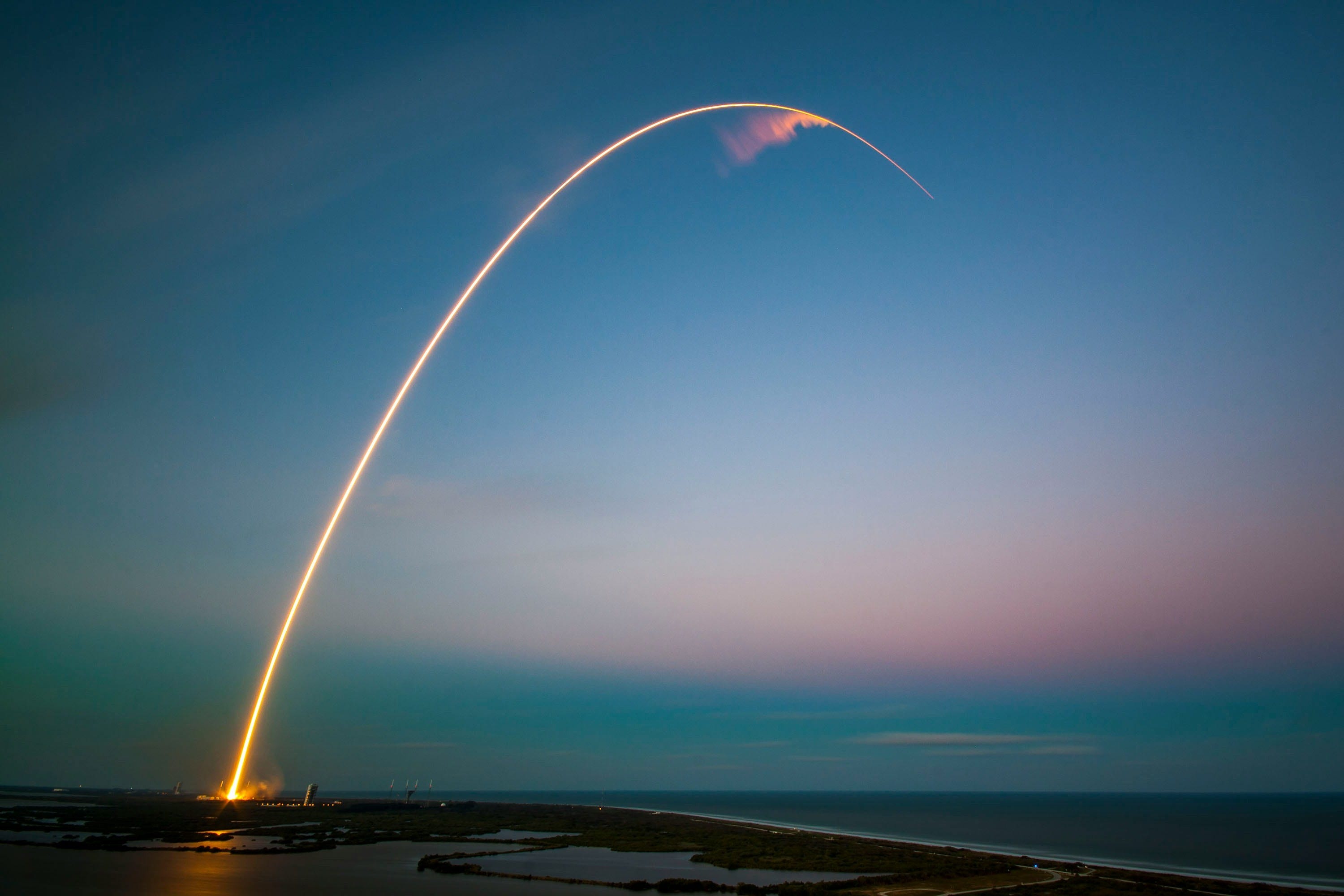
SpaceX launch, Cape Canaveral Air Force Station, United States, March 2016.
As we enter 2026, we want to begin with a simple orientation.
We are living in a moment of accelerating technological, social, and psychological change. Artificial intelligence is no longer a distant concept or niche tool—it is rapidly becoming a shaping force in how we work, relate, create, and make meaning together. These shifts are powerful, often exhilarating, and at times deeply unsettling. And, we are living in a moment of extreme polarization, uncertainty, and newly felt dangers, where the systems that long seemed stable now appear to be crumbling around us.
At Human Energy, we believe such a moment calls, more than ever, for collective wisdom and purpose. And so our work begins not with reaction, but with attention. We believe that how we attend to these forces—individually and collectively—matters as much as the forces themselves. Focused, shared attention generates the collective intelligence needed to navigate what comes next, with common purpose.
Human Energy exists as a catalytic hub igniting collaborative inquiry and new insight into how emerging technologies influence human life at every scale: the individual nervous system, our relationships, our communities, our politics, and the planet as a whole. Our guiding question remains consistent: how can we engage technology in ways that cultivate coherence, creativity, and care rather than fragmentation, extraction, and overwhelm?
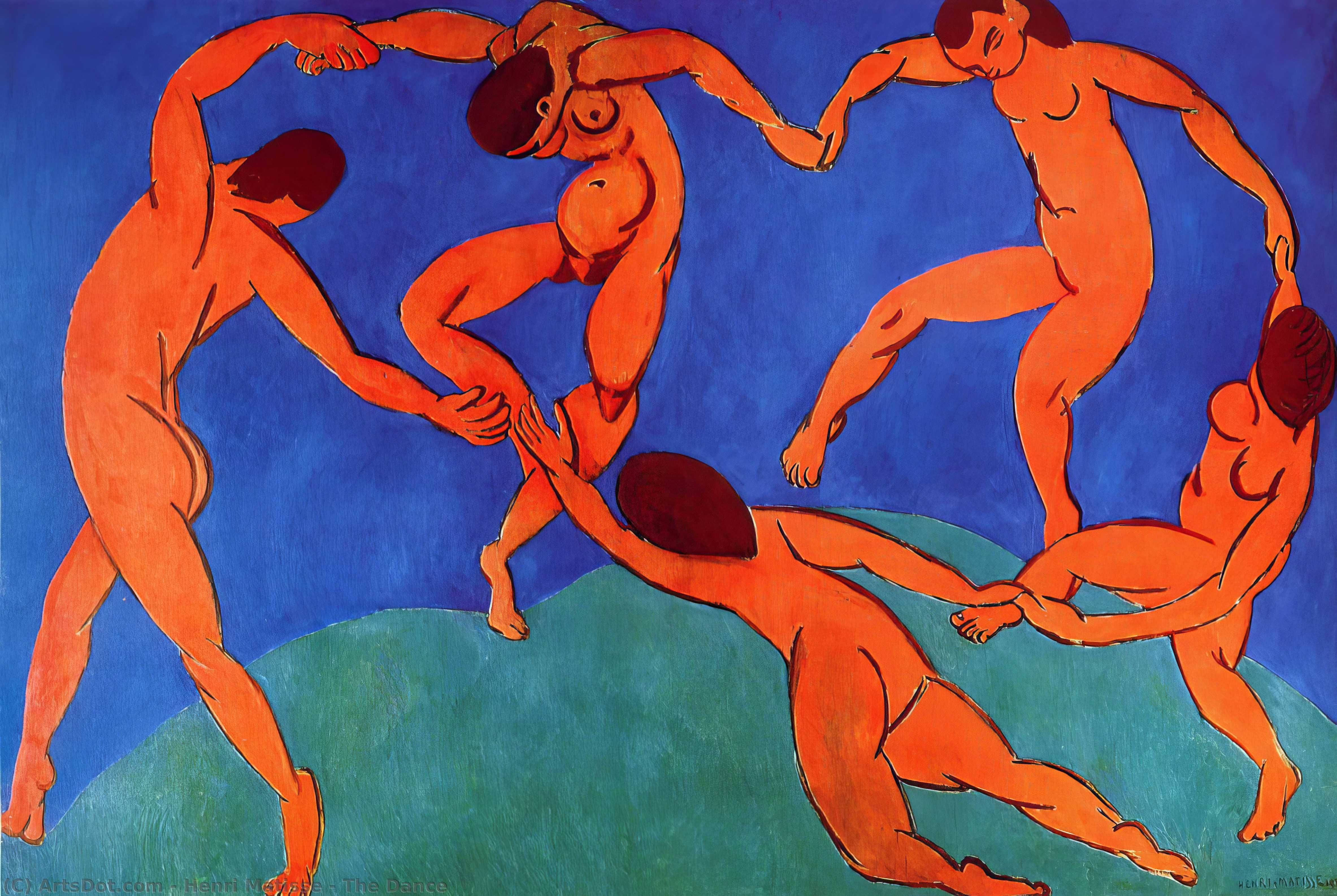
The Dance, Henri Matisse, 1909. Oil on canvas. The State Hermitage Museum, Saint Petersburg.
Activating Collective Intelligence Through Salons and Shared Sensemaking
In 2025, we began a public-facing exploration of these questions through the Global Salon Series. Our first two salons, held in New York City and San Francisco, brought together diverse thinkers, practitioners, and community members to explore the evolving relationship between artificial intelligence, human values, and collective life. These salons were not designed to produce easy answers. Instead, they functioned as spaces of shared sensemaking—to focus collective attention and articulate what is often felt but not yet named. What emerged was not just understanding, but new forms of collective intelligence taking shape in real time.


These gatherings forged a shared recognition: technology does not simply shape tools or workflows; it shapes perception, attention, and relationship. In this way, AI participates in the formation of what philosopher Pierre Teilhard de Chardin called the noosphere—Earth’s emerging sphere of collective consciousness. The salons affirmed our belief that this sphere is not formed automatically or benignly. It is shaped through choices, values, and cultural practices.
The question is whether we shape it consciously—or allow it to form by default.
In 2026, we will continue this inquiry with two new salons, to be announced soon. These gatherings remain central to our work because they embody a countercultural practice: creating intentional, relational spaces in an era dominated by speed, scale, and abstraction. We see salons as one way of cultivating collective intelligence—deliberately, in relationship, and with the intention of catalyzing new capacities for collective response.
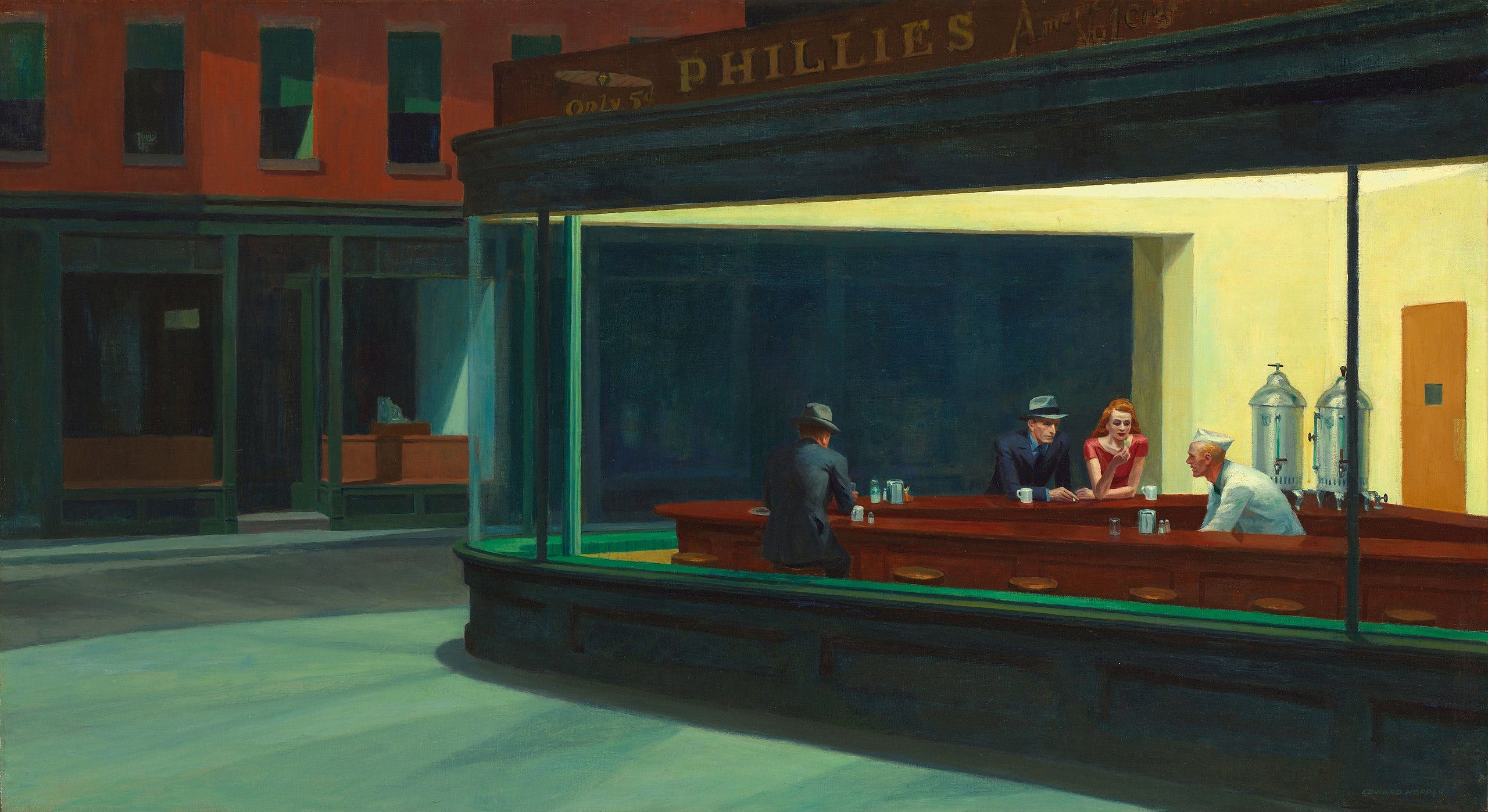
Nighthawks, Edward Hopper, 1942. The Art Institute of Chicago.
The Techno-Social Dilemma
Alongside our salon work, 2025 marked the beginning of the development of our first online course on navigating the techno-social dilemma. We use this term to describe a defining condition of our time: the reality that powerful technologies are evolving faster than our cultural norms, ethical frameworks, and psychological capacity to understand and integrate them.
The techno-social dilemma shows up in many forms—attention fragmentation, chronic overstimulation, polarization, loss of agency, and a growing sense of disconnection despite unprecedented connectivity. These outcomes are not accidental. Technologies are not neutral; they carry assumptions, incentives, and values that shape human behavior at scale. Yet rejection or retreat is neither realistic nor desirable. The challenge is not whether we engage technology, but how.
Our course is an invitation to engage intentionally and deeply with this dynamic landscape. Through thoughtful, structured study, we explore the historical, social, psychological, and technological dimensions that give rise to the techno-social dilemma. We examine where it appears in daily life and how both individuals and communities might respond with greater agency and awareness. The goal is not mastery or control, but orientation—learning to see the forces shaping us clearly enough to choose how we participate. The course builds capacity for this kind of conscious navigation.
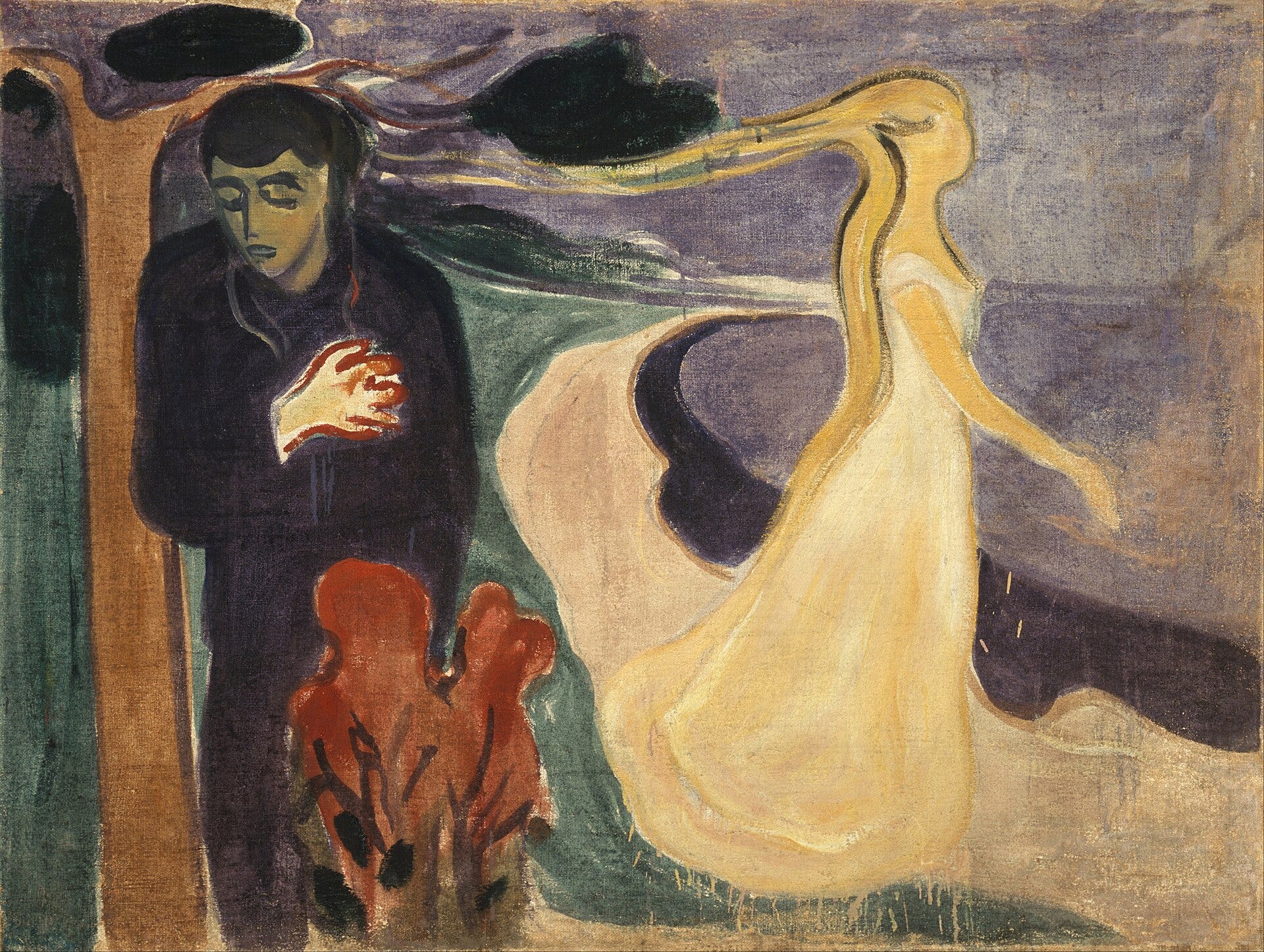
Separation, Edvard Munch, 1896. Oil on canvas. Munch Museum, Oslo.
AI: Risk and Resource
Artificial intelligence sits at the heart of this dilemma. On one hand, AI has the capacity to accelerate existing dynamics, pulling us deeper into abstraction, automation, and informational overload. On the other hand, it offers unprecedented tools for pattern recognition, reflection, coordination, and learning. It can help us see the river more clearly—even as it contributes to the strength of the current.
At Human Energy, we approach AI neither as savior nor villain. We see it as a mirror—one that reflects our values, assumptions, and priorities back to us with increasing clarity. The question is whether we use that mirror to cultivate wisdom and coherence or simply to amplify speed and fragmentation. In 2026, expect more from Human Energy in deepening understanding of artificial intelligence, offering practical and philosophical insights into how it might be engaged in service of human and planetary well-being. We are also building new partnerships with others who are working on applied projects, exploring how noospheric consciousness can inform concrete innovation.
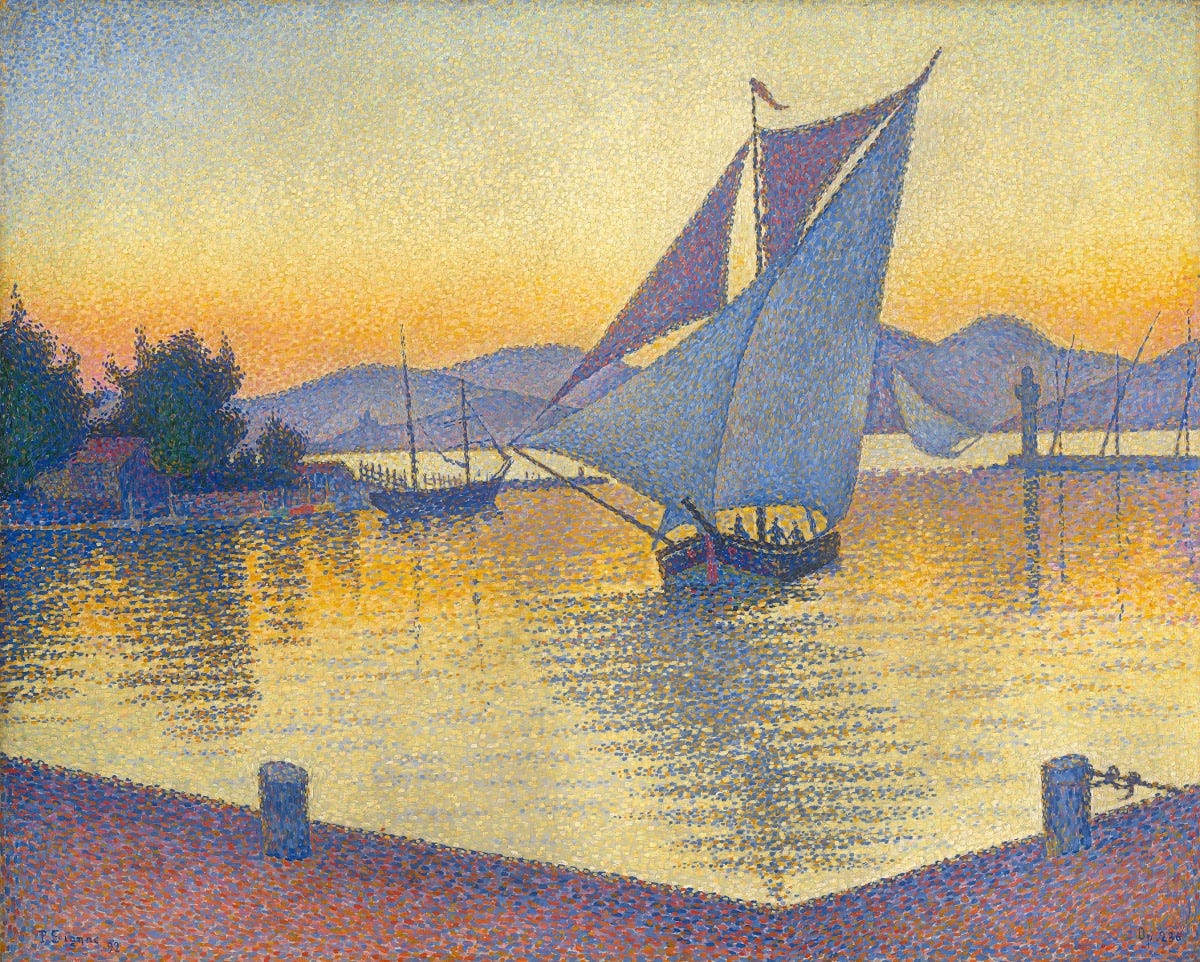
The Port at Sunset (Opus 236, Saint-Tropez), Paul Signac, 1892. Oil on canvas.
The Promise of the Noosphere
All of this work unfolds within a broader planetary context. The noosphere—the sphere of shared thought, culture, and meaning—is still forming. Just as the geosphere and biosphere developed through periods of turbulence and creativity, we should expect the noosphere to be dynamic, uneven, and at times overwhelming. Collective consciousness, like any living system, passes through both chaotic and stabilizing phases.
Our belief is simple but grounded: continued, focused, collective attention to this emerging phenomenon increases the likelihood that we move forward in ways that are healthy, inspired, and ultimately beautiful. Beauty, creativity, and care are not peripheral concerns; they are stabilizing forces within complex systems. They help regulate energy—human and planetary alike.
As we move through 2026, Human Energy remains committed to this work: cultivating spaces for reflection, dialogue, and learning that support a more coherent, coevolving relationship between humanity, technology, and the living Earth. Our work catalyzes the kind of collective consciousness from which wiser action emerges. The future is not predetermined. It is shaped, moment by moment, by how we pay attention—and how we choose to respond—together.

Thanks for these centering thoughts as we begin what promises to be a new year of accelerating social and technological change.
It has been wonderful to collaborate with HE and count with me for concretizing the vision in this post :)